Oral cholera vaccination (OCV) campaigns were conducted from February to April 2014 among internally displaced persons (IDPs) in the midst of a humanitarian crisis. Semi-structured interviews were completed with 49 IDPs in the months after the campaigns to better understand perceptions of cholera and reasons for full, partial or non-acceptance of the OCV.
Read moreRelated content

Projects
Project AViD took a critical anthropological approach to exploring what actions can be taken to optimise vaccine acceptance during a disease outbreak.

Media and commentary
CSIS and the London School of Hygiene and Tropical Medicine’s Vaccine Confidence Project™ have launched a…

Projects
To identify knowledge gaps, beliefs and attitudes in relation to the COVID-19 pandemic and COVID-19 vaccine acceptance among adults in the Asia-Pacific region, the Vaccine Confidence Project conducted two waves of quantitative research in 2021 and 2022.
Publications
This study consists of 65 semi-structured interviews with vaccine providers in Croatia, France, Greece, and Romania to investigate concerns HCWs…

Publications
A mixed-methods approach was used including an online survey in 15 countries which aimed to determine drivers of HCPs vaccine confidence and examine how these drivers vary across nations.
Projects
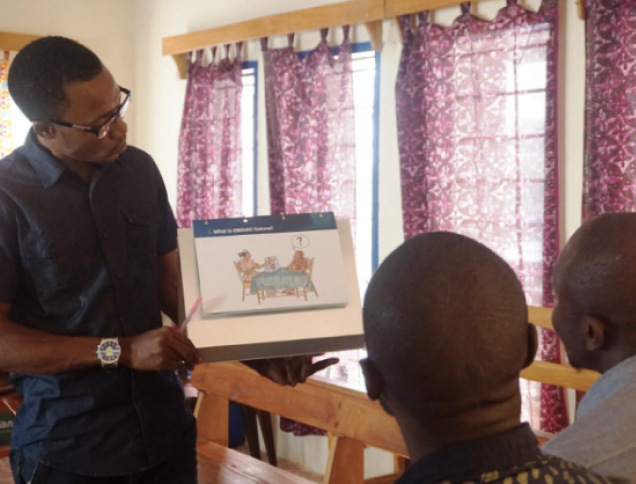
EBODAC (Ebola Vaccine Deployment, Acceptance and Compliance) was set up to develop strategies and tools to encourage acceptance and uptake of new Ebola vaccines in the context of clinical trials.